Case Study — Bowery Valuation

Designing "Complex": Increasing Data Reuse by 41%

A Design Management case study on building a central comparables database that set the precedent for Bowery's data-reuse strategy.

Managing a core design team and 2 other feature pods, simultaneously.

The Problem

Bowery Valuation logo

When I joined Bowery, we had not yet accomplished an efficient and scalable way of enabling commercial real estate appraisers to reuse our existing, previously vetted data for multiple future appraisals. This meant appraisers were wasting time re-validating or searching for relevant data that was leading to extended delivery timelines and client frustration.

At the beginning of my second year at Bowery, my team was tasked with the objective of "creating an archetype for data reuse."

My Role & Objectives

As a Design Lead, Manager I managed a core team of designers and oversaw 3 feature teams along with my Lead PM and Engineering Manager. This project started before I had my triad of PM/Design/Eng and was overseeing the 3 feature pods alone as the middle man between leadership and the ICs. My objectives:

  • Advocate for team by defining requirements
  • Allocate talent
  • Coach team on understanding our users
  • Support ideation
  • Manage timeline
  • Support delivery and next steps

Some Learnings

design_services

Define Scope

Aligning stakeholders on the scope and requirements of this ask was critical in the success of this project and establishing a definition of "done" for our MVP.

handshake

Coach, Don't Dictate

As the sole leader guiding the team on this project, it was incredibly important to walk the line between coaching the individual contributors, but not micro-managing the work. I worked to allow the team a sense of ownership while helping make sure we met our goals effectively.

recommend

Supporting Collaboration

All disciplines — Product, Design, Engineering — were represented in each stage of the project, ensuring collective buy-in, feasibility and viability, along with usability, of solutions and a smooth delivery experience.

Background

Bowery Valuation builds digital technology solutions to support commercial real estate appraisers in their work inspecting, evaluating and communicating their appraisals to clients. Our "pod"'s primary objective: increase the frequency and ease with which appraisers were able to use already existing data for new appraisals that they were working on.

The core strategy rested on appraiser ability to reuse existing, previously appraised properties — Comparables — as the basis for new appraisals.

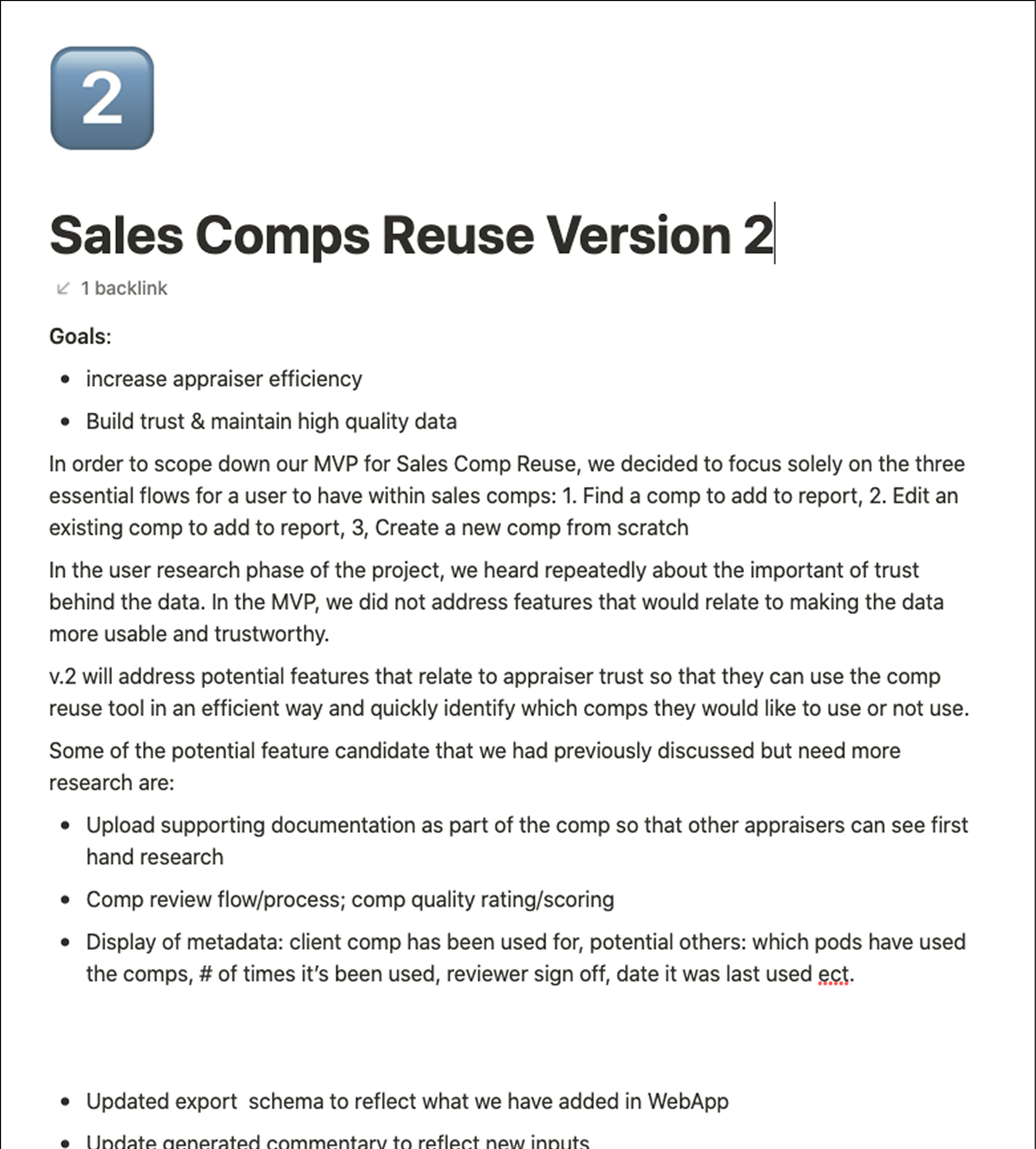
Defining Requirements

Defining Requirements — product briefs for Bowery leadership

I guided the team on strategy to align on with leadership on the problem we were being asked to solve. The strategy was 2 parts:

  • Present the problem — we wrote 3 different product briefs to present to leadership to get more clarity on the ask
  • Talk it out — I facilitated a number of conversations between the team and leadership in order to align on requirements and unstated expectations for the project

Allocating Talent

  • The primaries: I paired my designer who had the most legacy knowledge with the PM who had the most user knowledge as the primaries on the project
  • The other two pods: worked on building the backend infrastructure for the project, supported the leads and took over the important backlog items from the primary pod

Managing & Supporting

Creating the ideal environment to get this work done by:

  • Re-allocating peripheral work: redirecting work to teams with smaller backlogs
  • Supporting the timeline: holding the team accountable for deadlines, making sure they had the support they needed to meet those deadlines, securing pre-work from engineering teams
  • Providing mentorship and feedback: encouraging the designer to share her work at team critiques, making myself available for questions or work feedback
  • Managing stakeholders: acted as liaison between the team and leadership, providing progress updates and answering logistic questions

Final Product

The ideation and solution development was a highly collaborative process between Product, Design and Engineering:

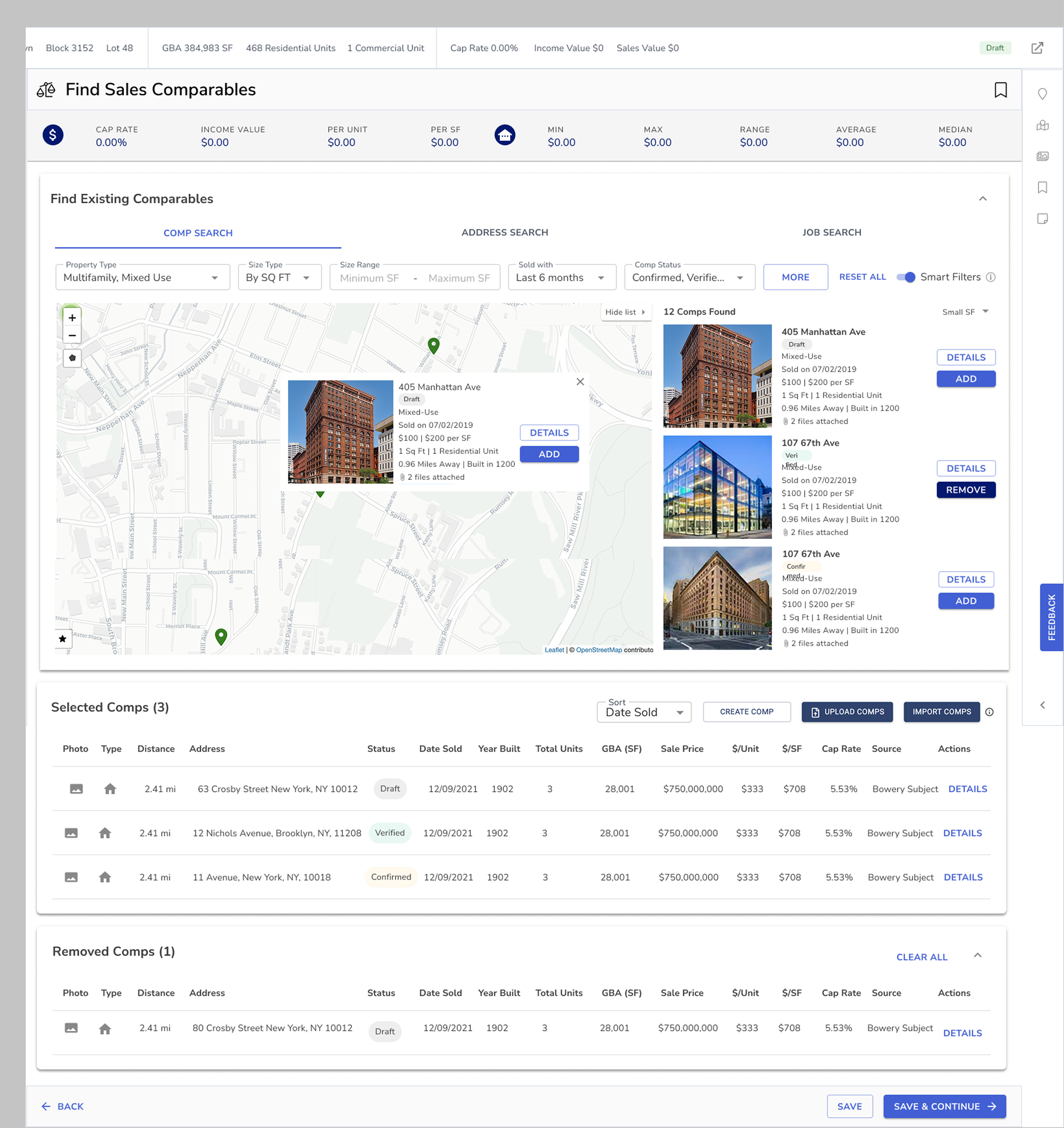
  • The MVP was a highly usable, streamlined, searchable database of all our vetted data — making it easy to find the information appraisers need to support their work
  • I supported the primary designer in holding a collective ideation session with other designers, engineers, and PMs to make sure there was a breadth of ideas considered for this project
  • Consistent communication between Prod/Design/Eng allowed us to work on this project in tandem to make sure we delivered the best solution possible

Designing Complex — Bowery Valuation sales comparables search tool

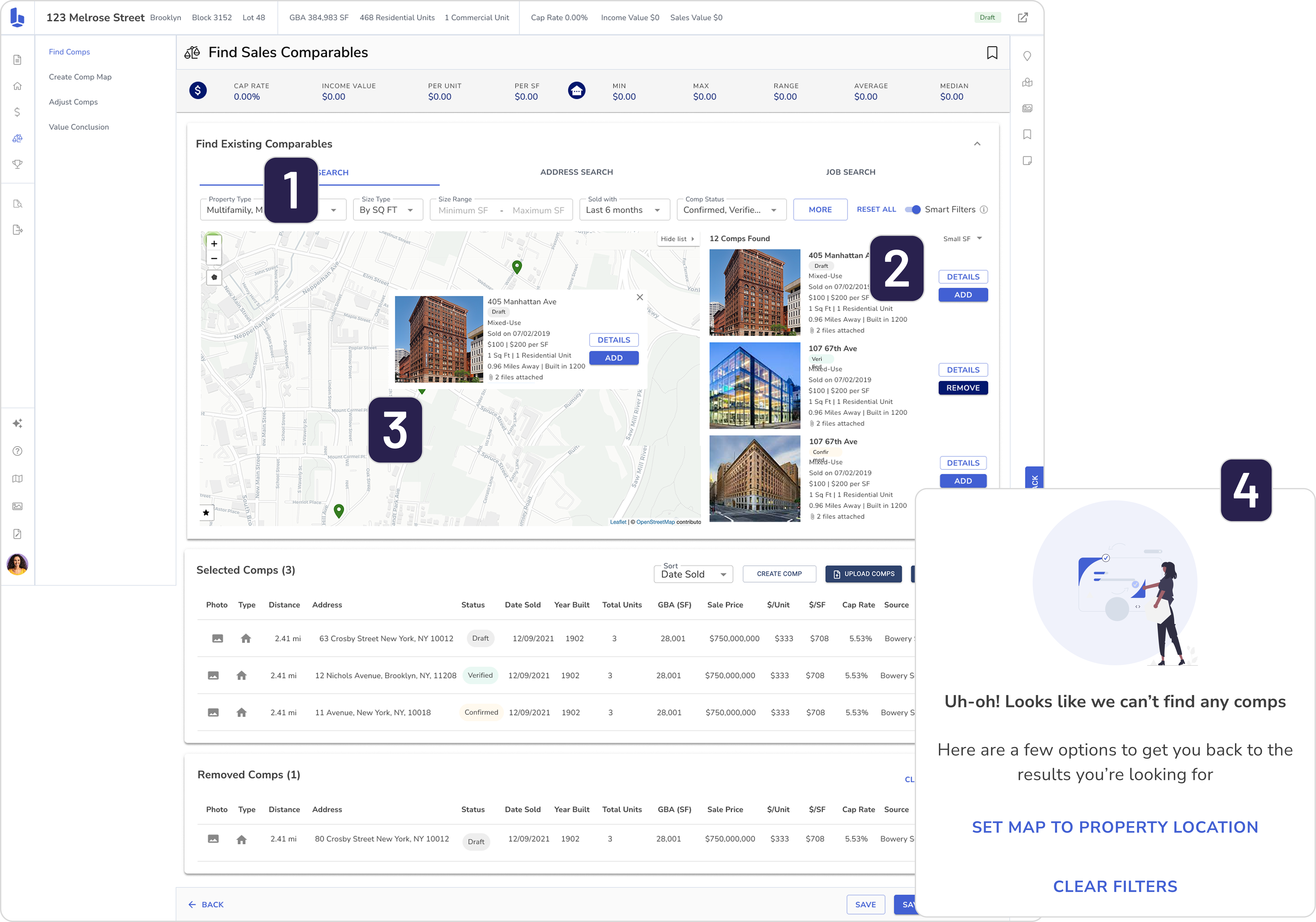
Design Highlights

Some design highlights:

1

Search: Users can search by map or by a specific property address

2

Filters: AI-powered Smart Filters pull data from the parent property and find the best available comparable properties

3

Control: An interactive polygon allows users more control over the location they are searching on the map

4

Direction: Clear error messaging and action buttons help users get back on track

Designing Complex — final product design highlights

Outcomes

Increased data reuse by 41%

Increasing the amount of data available to re-use was a company-wide OKR. The team knocked it out of the park with a 41% increase in Comparables data reuse in appraisal reports.

30 min per report time decrease

With the work we did we were able to decrease the amount of time it took an appraiser to create an appraisal by 30 min per report, just with our MVP!

Designer promotion

The success of this project allowed me to successfully advocate for the promotion of the designer who had led it. After launch I promoted her to a senior designer on my team.

A new triad!

While this project was underway, I worked closely with my (newly hired mid-project) Lead PM and Engineering Manager to develop and socialize the UX strategy for upcoming roadmap items and next iterations of this project.

sentiment_very_satisfied

Thanks for listening!

Back to portfolio